
 Top Hiring Industries
Semicon West Is Running Out of Time: ATE, Chemicals, and the Hiring Freeze Nobody Can Explain
Key Elements
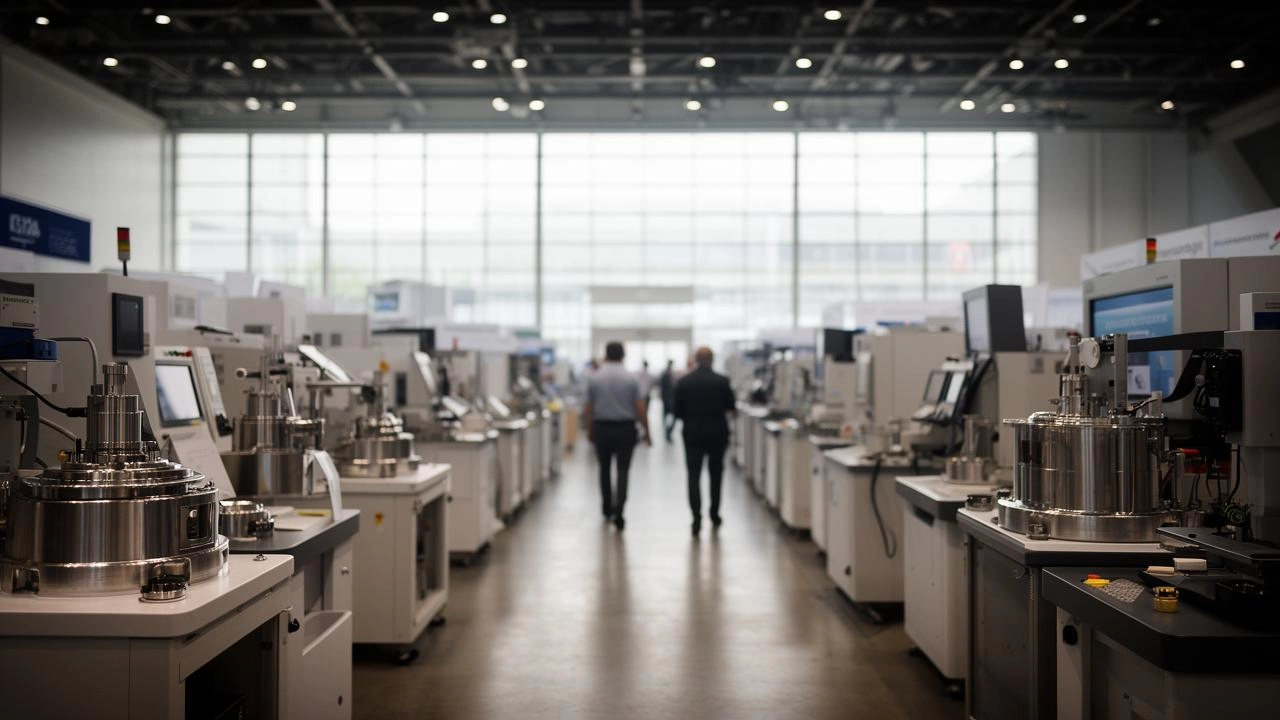
Semicon West had one job this year: prove it still matters. By day three, walking the floor at the Moscone Center, Jon Y could see the answer. The place was slow. The sessions leaned toward policy, supply chain, and "good practices" rather than how any of the equipment actually works. Where Semicon Taiwan would typically show two or three panel-handling robots, San Francisco had one.
"It's a scheduling collision, and it's expensive for the industry," said Culpan, who publishes the Culpium newsletter, speaking on the Supply Chained podcast alongside Jon Y, host of Visionometry and author of a keynote at the show's Test Vision Symposium. The collision's name was the Open Compute Project, held in San Jose the same week, roughly fifty miles away. OCP's star, in Jon's words, "has been skyrocketing." He described it as "immensely more packed," with colleagues choosing it over Semicon West. Culpan put it more bluntly: people were "begging for tickets to OCP."
The crowd told its own story. Jon noted a notably large Korean presence and very few Taiwanese attendees — an odd inversion for a show that once anchored American chipmaking. His explanation: the Bay Area isn't a silicon manufacturing location anymore. Culpan framed it plainly: "The whole chip industry has migrated to Taiwan, with Korea playing a secondary role," though Korea's footprint is concentrated around a couple of companies.
This was the last year Semicon West comes to San Francisco. It moves to Arizona and shifts from October to March — a change that also separates it from Semicon Taiwan, held only four to six weeks earlier, reducing the overlap in vendors, equipment, and talks. Culpan's guess, offered with low confidence: "Texas will be next."
The test step nobody wants to talk about
Jon's 9 a.m. keynote — unrecorded, delivered once — traced automated test equipment from the 1950s to the 2020s. ATE, as he defined it for the room, is the machinery that automates chip testing because chips are too big and complex to test by hand. The discipline lives in a permanent tug-of-war between economics (test is a cost center) and quality (don't ship bad product).
The cost argument is what makes the room sit up. Jon said he was told NVIDIA chips still fail post-test at a striking rate. When he asked the person who ran the statistic whether the figure was accurate, "he replied it's worse." Culpan's framing: a failing chip wastes the whole board and everything around it.
Jon put the escalation at roughly a factor of ten at each step away from the fab. Catch a defect in the clean room, and the cost is contained. Miss it, and you're replacing a server rack. Hence the industry saying he relayed: "Catch it in the clean room."
His stated motivation was to correct an imbalance. "Lithography has gotten too much attention," he said, with the industry fixated on ASML and its tin-droplet laser process, while other high-value steps get treated as "the left-handed stepchild... stuck under the cupboard." Culpan agreed testing is underappreciated.

Chemicals are the quiet tax on overseas fabs
Materials drew a larger discussion and more panelists at Semicon West than usual, alongside packaging. Culpan called materials the hardest topic in the industry to communicate — each chemical, gas, or liquid is so specialized and injected into such specific tooling that the changes are hard to explain. "With a machine you can look at something moving from A to B," he said. Chemistry is "here's a cylinder," and it gets little love.
The cylinder is where the yield goes. Culpan relayed a conversation with someone at a major chipmaker about the challenge of moving TSMC and Samsung production to the U.S. The point: matching the process recipe is not enough.
"Even though the formula on the layout is the same, the chemical delivered by your supplier in Texas or Arizona could be just slightly different to the one you're using back home," Culpan said. "Even if it's the same supplier, their input chemicals, their base chemicals are all different."
Add air pressure and humidity, and small deviations force process reconfiguration. Each new node brings new process steps and entirely new chemical formulations, so the chemical engineers carry a continuous burden. On the show floor, many vendors pitched variations of "our chemicals are pure, check us out." That pitch lands differently once you understand the problem.

The hiring freeze nobody can explain
The unresolved thread is the one with the most market signal. Jon said he has heard from three different people that semiconductor equipment makers are instituting hiring freezes — and he could not get to the bottom of it. He declined to name the companies.
The explanations he's heard don't hold up cleanly. Working down headcount fat from COVID, which he called a weak excuse because the buildup was five years ago. Replacing labor with AI. And the one implied but never said outright: bracing for a fall.
"Some have said it was they're trying to work down fat from COVID, which seems like a weak excuse because it was five years ago," Jon said. "Some people are saying they're trying to do more AI to replace human labor... they're bracing for a fall."
Culpan offered a labor-economics reading. In Europe it's hard to fire people, so hiring is a long-term commitment, and there may be diminishing marginal returns on labor as the available engineering talent is less suited to increasingly difficult work. "Five years ago... engineers came out of the universities and they were absolutely ready to go," he said, "but now it's more and more difficult to get the quality staff that you need for the more and more difficult jobs you're trying to handle."
He also plugged his "Caskey Hulk MA" supply index, which he said shows mid-supply-chain problems driven by inability to ship product rather than weak demand. That would normally favor equipment makers — except power constraints, data center issues, and bullwhip effects across the AI supply chain make a five-year-ahead equipment builder's pause understandable.
Jon added texture: test-related roles still have many open postings but are hard to fill because the knowledge is specialized. The freeze reports are inconsistent across companies, and at least one case may be idiosyncratic, tied to expansion problems from prior strategic moves. Both hosts invited listeners with information to email supplychainedpod@gmail.com.
"When there's smoke there's fire, so there's probably something on this to investigate further," Culpan said.
Jon's closing image for the uncertainty: "we're all just trying to feel the elephant," with each person touching a different part.
The two-state conference
The gap between the two shows is worth seeing side by side, because it maps where the industry's attention has gone.
| Factor | Semicon West | Semicon Taiwan |
|---|---|---|
| Technical depth | Policy and supply-chain focused | More technical, per Jon |
| Floor energy | Slow, subdued on day three | "Huge energy" |
| Panel-handling robots on show | One | Two or three typical |
| Audience | Notably many Koreans, few Taiwanese | — |
| Timing | Same week as OCP | Four to six weeks earlier |
| Future | Moves to Arizona, March | — |
The scheduling collision was the proximate cause. The deeper cause is geography: the Bay Area no longer makes chips, and the show's technical gravity followed the fabs.
What the tape is saying
The market backdrop gives the hiring-freeze rumor extra weight. On October 22, the Philadelphia Semiconductor Index fell 6.72% in a single session to 10,731.98 — 773.58 points — as doubts about AI capital spending resurfaced, while the Nasdaq dropped 2.60% to 26,008.86. Morgan Stanley's strategy team, led by Mike Wilson, has since argued the semiconductor correction is in its "end phase," finishing around mid-November, but warned chip stocks could fall another 10% to 15% first, with the SOX potentially testing 9,500.
That math matters for how you read three anonymous hiring freezes. Equipment makers are the first link in the capex chain: if they are quietly tapping the brakes while demand looks strong, either they see something in their order books that the sell-side doesn't, or a handful of companies are correcting their own over-expansion. The hosts couldn't resolve it, and neither should you pretend to. Track the materials story and the hiring story separately — one is a confirmed, structural drag on U.S. fab economics, the other is smoke without a confirmed fire. And note what was lost: the ATE keynote, the most substantive content of the episode, was delivered once and never recorded. In an industry this fixated on lithography, the step that catches the tenfold mistake still can't get a camera.
Full content available at:Jon Goes to Semicon